
The useful starting point is the exact vehicle and transmission, a repeatable symptom, full module scan data, fluid and leak findings, operating temperature, service history, and a written account of what was ruled in or out. Match any online pattern or price range to the actual vehicle, installed unit, symptom, test result, and complete written scope when researching external transmission cooler decisions.
Joliet / Diagnostic First / Written Options
Do You Need an External Transmission Cooler in Joliet?
Joliet drivers can compare warning signs, tow risk, useful tests, and written repair choices for Do You Need an External Transmission Cooler in Joliet.
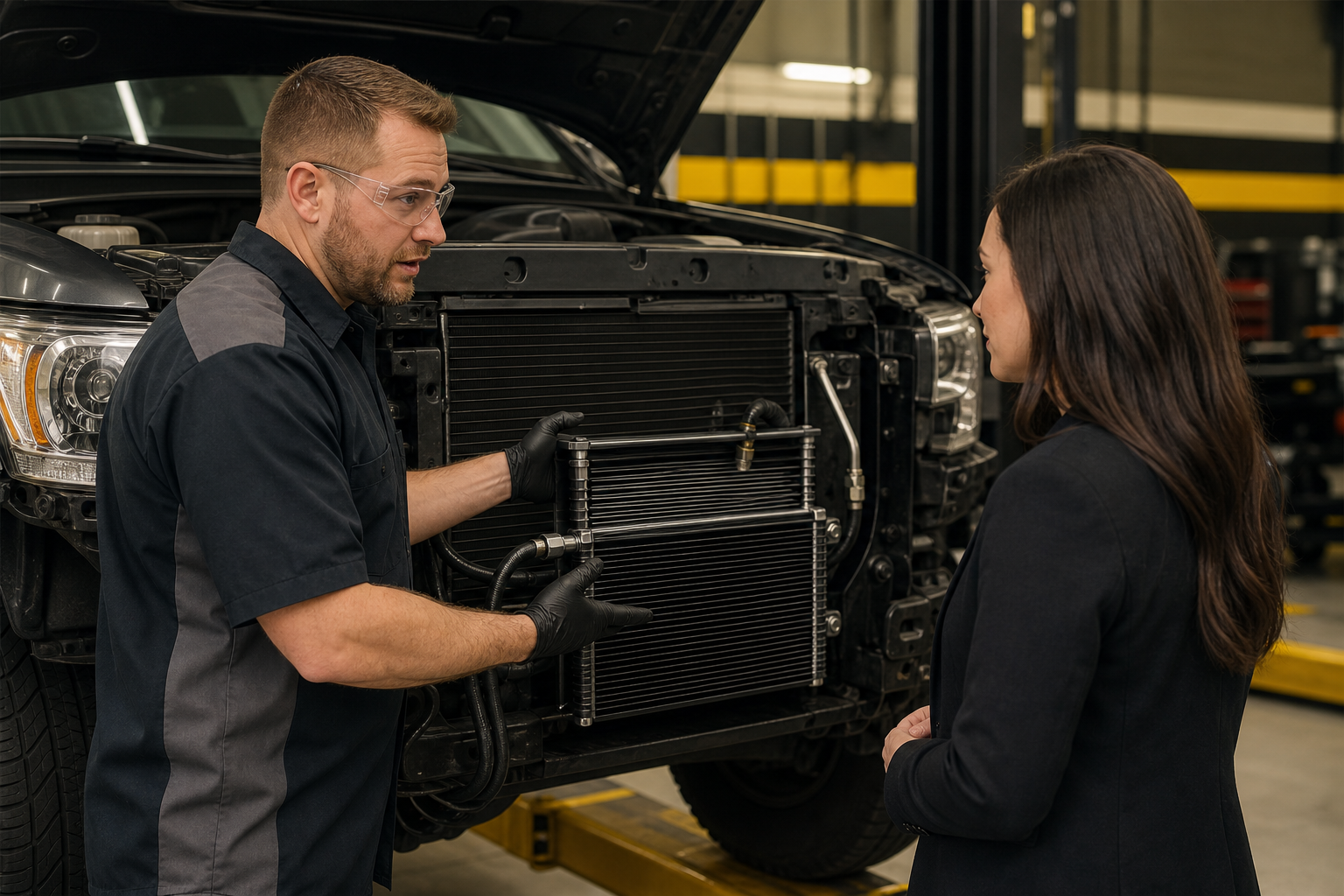
This guide looks at external transmission cooler decisions from the driver's side of the decision: what to record, when to stop driving near I-80, which tests should come before parts, and what belongs in a written repair, rebuild, or replacement comparison.
The useful starting point is the exact vehicle and transmission, a repeatable symptom, full module scan data, fluid and leak findings, operating temperature, service history, and a written account of what was ruled in or out. Use the exact fluid specification and level procedure, then separate maintenance from an active leak, contamination, pressure loss, overheating, or internal wear. For a Joliet-area vehicle heading toward New Lenox, the next step should follow the actual operating evidence rather than the article headline alone.
01
What to Document Before Diagnosis
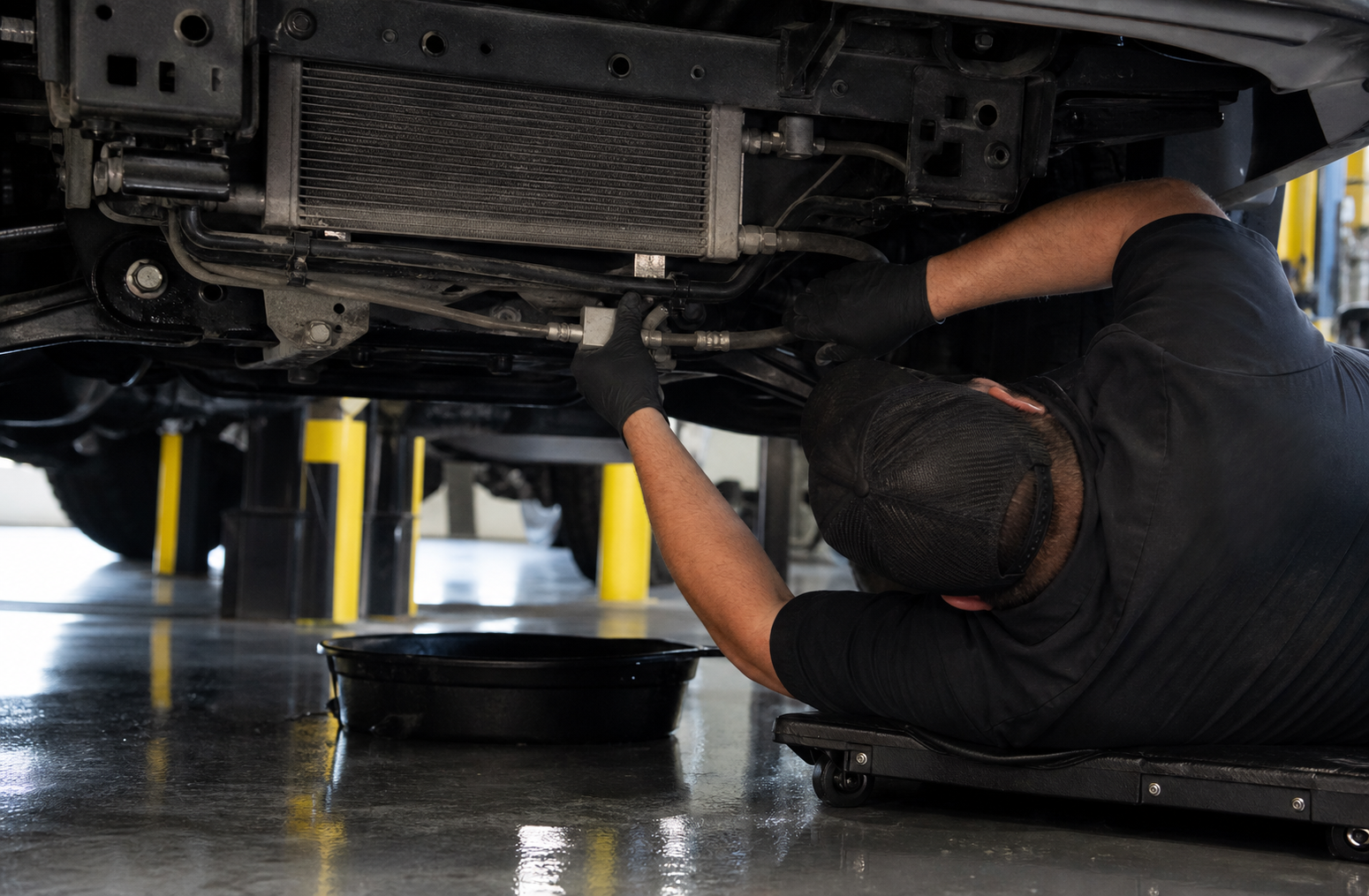
Start the external transmission cooler decisions discussion with what the vehicle actually did. Note delayed drive or reverse, a flare between gears, shudder at steady throttle, a hard downshift, warning messages, noise, smell, or engine speed rising without matching road speed. Record whether it happened cold, fully warm, near I-80, or after a longer run toward New Lenox.
The useful starting point is the exact vehicle and transmission, a repeatable symptom, full module scan data, fluid and leak findings, operating temperature, service history, and a written account of what was ruled in or out. Use the exact fluid specification and level procedure, then separate maintenance from an active leak, contamination, pressure loss, overheating, or internal wear. Two vehicles described with the same symptom word can need different tests, so preserve the sequence of events instead of reducing the complaint to 'bad transmission.' When the topic is external transmission cooler decisions, keep this checkpoint with the written estimate.
02
Joliet Driving Conditions That Change the Test
Joliet driving mixes short trips, railroad crossings, delivery stops, summer heat, winter cold, and quick transitions from Route 30 to faster traffic. A concern that appears only after heat soak needs a different reproduction plan from one that happens on the first engagement of the morning. Use that evidence when discussing external transmission cooler decisions with the receiving facility.
For external transmission cooler decisions, include the normal route, passengers or payload, towing, idle time, and whether the vehicle is a family car, commuter, delivery van, or work truck. The conditions between Joliet and New Lenox can explain why a five-minute cold road test misses the complaint.

03
When to Park It and Ask About Towing
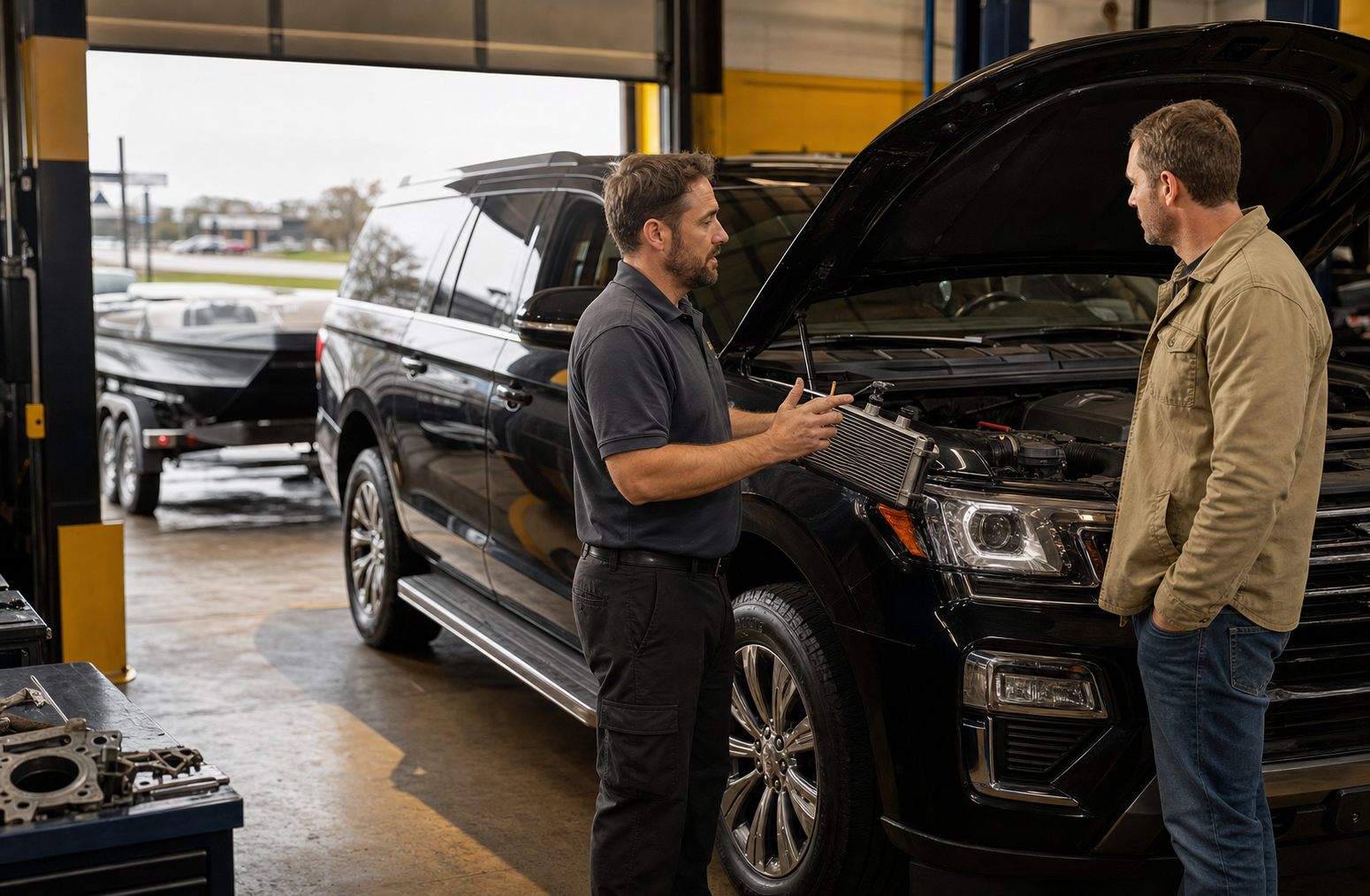
Stop driving when the transmission slips badly, loses forward or reverse, leaks quickly, overheats, grinds, or bangs into gear hard enough to affect control. Move out of traffic safely and ask the receiving facility whether a flatbed or another towing method is appropriate. That keeps the Joliet-area external transmission cooler decisions decision tied to the vehicle instead of a search phrase.
The article topic, including external transmission cooler decisions, cannot prove a vehicle is safe from a message. If the unit still engages every range, holds gear, and has no active leak or warning, a scheduled diagnosis may be reasonable, but severity and distance still control the decision before another trip on I-80.
04
Identification and Data Before Parts
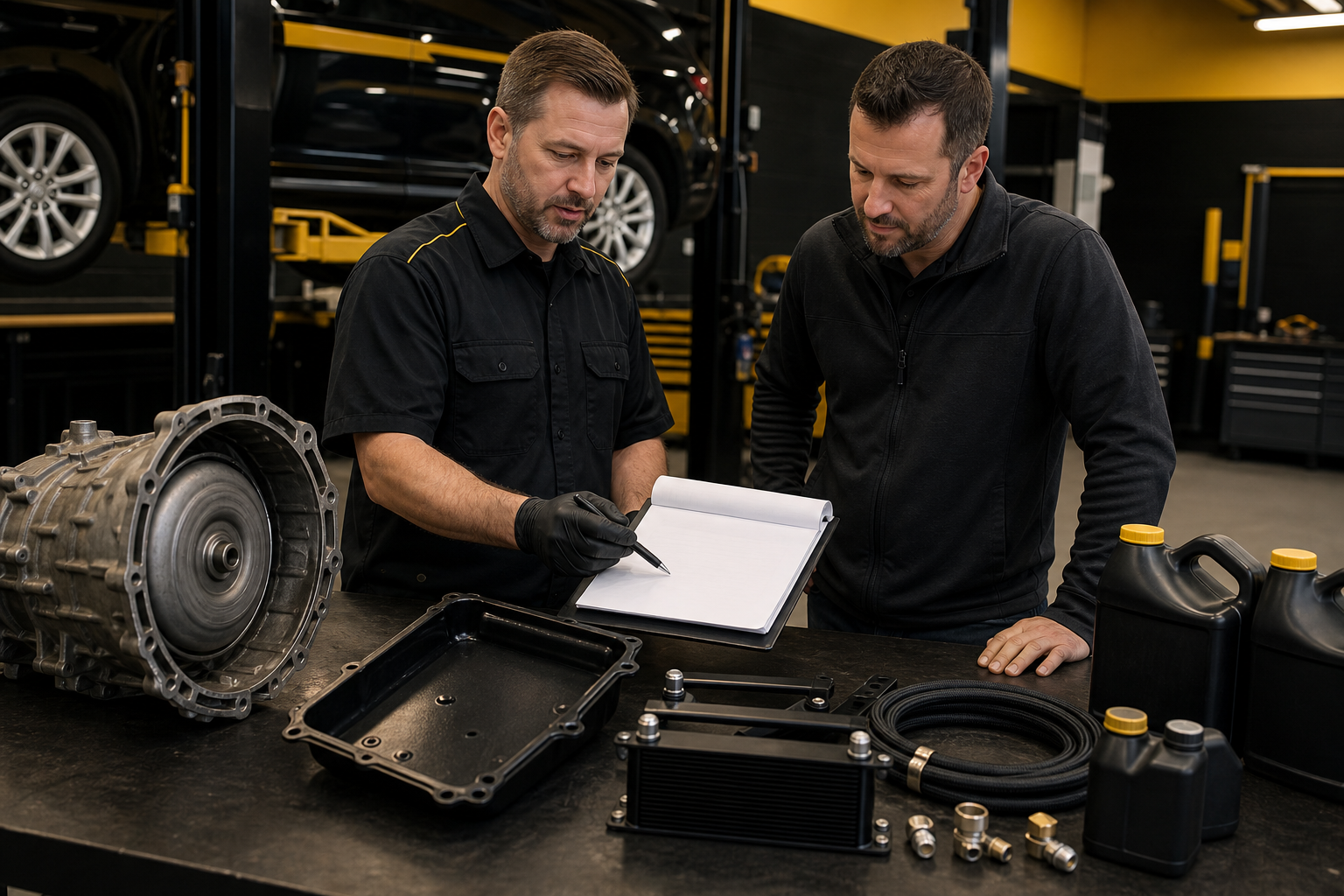
A diagnosis related to external transmission cooler decisions starts with VIN, model year, engine, drivetrain, build data, mileage, service history, and the exact transmission. Read the engine and transmission modules, save freeze-frame or event data, and compare commanded gear with input speed, output speed, temperature, and actual behavior.
The useful starting point is the exact vehicle and transmission, a repeatable symptom, full module scan data, fluid and leak findings, operating temperature, service history, and a written account of what was ruled in or out. The first pass should also check battery voltage, grounds, connectors, linkage, mounts, axles, cooler lines, and external leaks. Those checks can reveal a smaller repair or a second system contributing to a transmission-like symptom. Apply that boundary to external transmission cooler decisions before authorizing related work near I-80.
05
Reproduce the Complaint Without Abusing the Vehicle
A controlled road test for external transmission cooler decisions should reproduce the complaint without abusing the vehicle. Match the event to throttle, gear command, ratio, converter slip, temperature, and adaptation data where the platform supports it. Stop the test if engagement or speed control becomes unreliable.
Write down whether the event occurs on a Route 30 merge, during coastdown, on a 2-3 or 3-4 shift, at steady cruise, in reverse, or after twenty minutes. If public-road testing is unsafe, use scan data, lift inspection, fluid and pan findings, pressure testing, and other stationary evidence. When the topic is external transmission cooler decisions, keep this checkpoint with the written estimate.
06
What Fluid, Heat, Leaks, and Debris Can Show
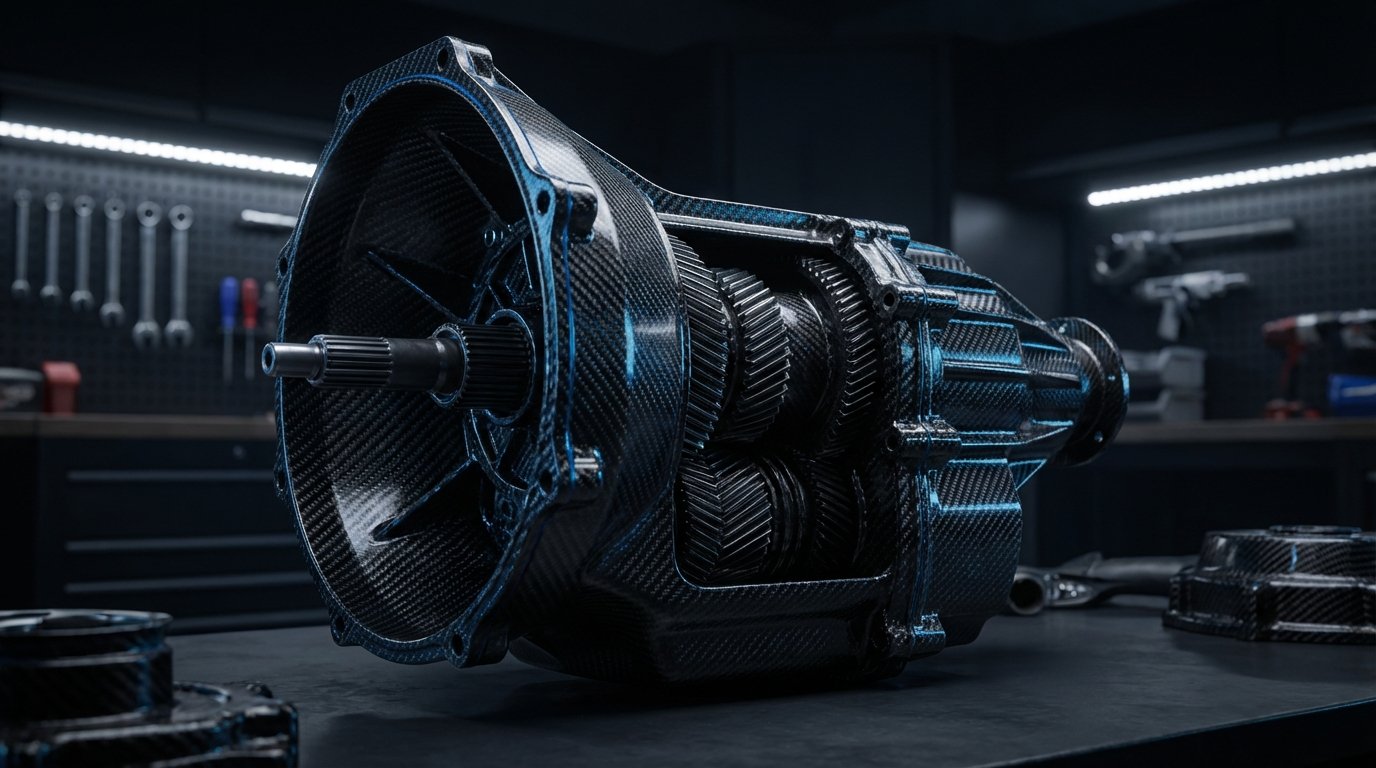
Fluid evidence can narrow external transmission cooler decisions, but color alone is not a diagnosis. Verify the exact specification, level procedure, and required temperature. Clean the wet area and identify whether a spot comes from the pan, cooler line, axle seal, case connector, engine, steering, or another source.
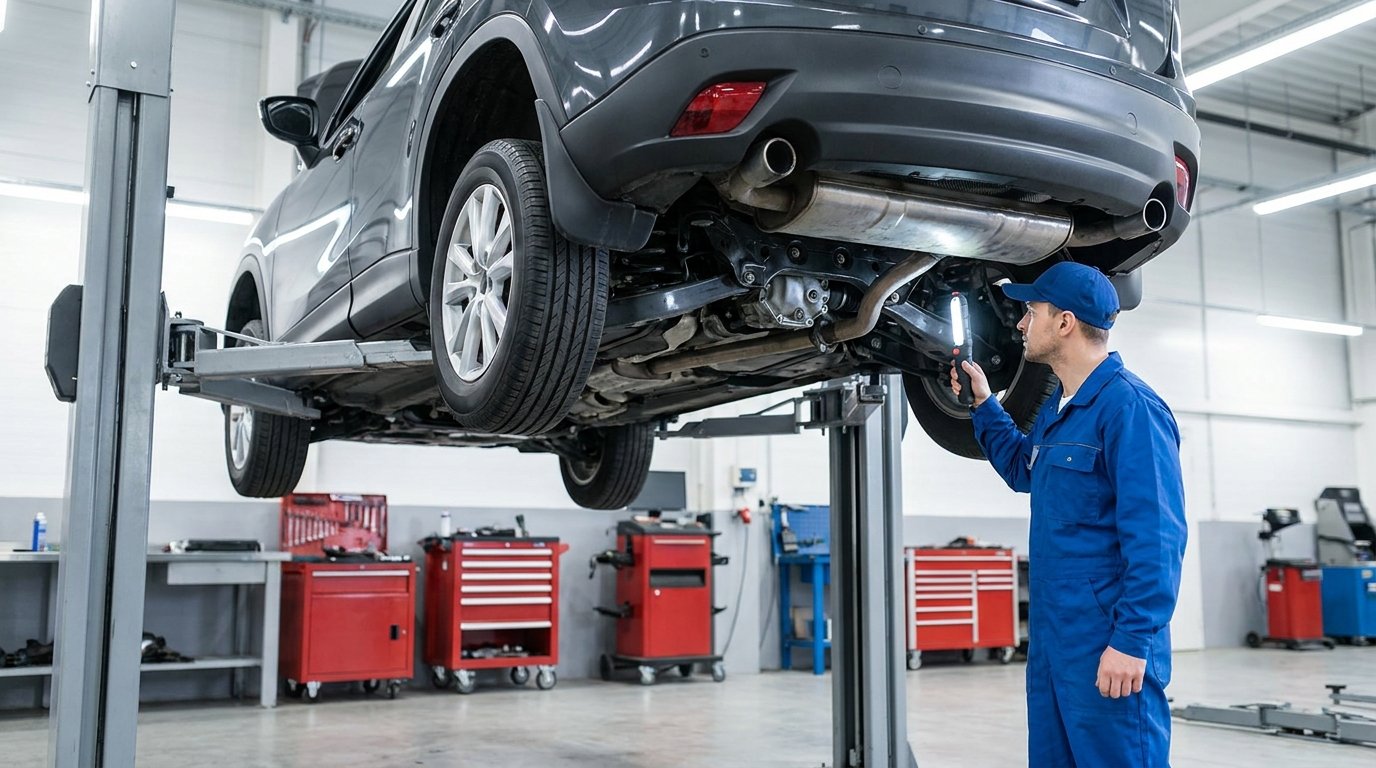
A maintenance service cannot restore worn clutches, repair a damaged pulley or gearset, correct a failed electrical circuit, or remove metal that has circulated through the system. Pause before a flush when the unit already slips, the fluid smells sharply burnt, or the pan contains substantial friction material or metal. Apply that boundary to external transmission cooler decisions before authorizing related work near I-80.
07
Electrical, Solenoid, and Valve-Body Checks
Electrical and hydraulic control checks matter to external transmission cooler decisions. Stable system voltage, module communication, speed and temperature signals, solenoid command, and wiring condition should be verified before a code is converted into a parts order.
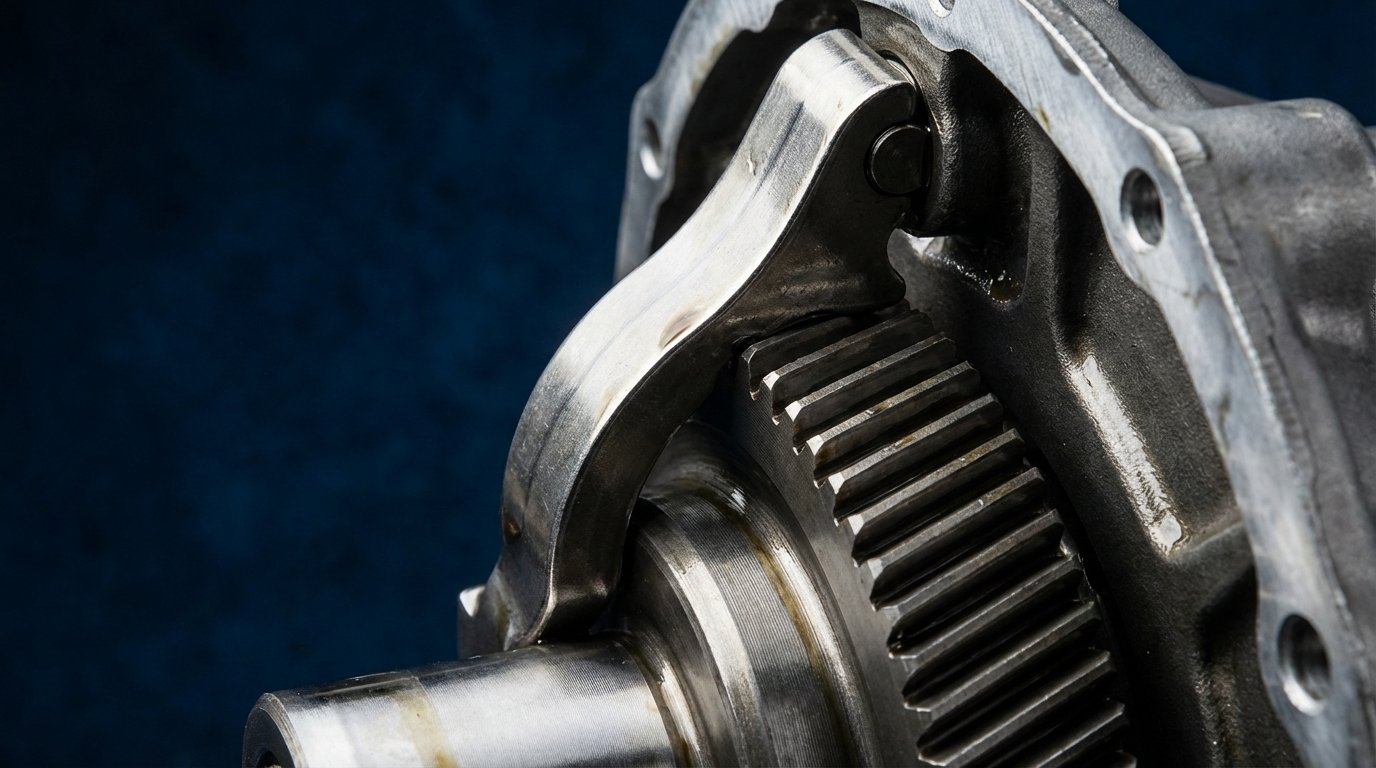
A solenoid may work electrically while a worn valve-body bore leaks pressure, and an adaptation value may be compensating for developing clutch wear. Command data, pressure behavior, fluid condition, shift timing, and internal debris belong in one explanation rather than separate guesses. Near Route 30, the same rule applies when external transmission cooler decisions is the reason for the appointment.
08
Evidence That Supports Internal Damage
Major internal work connected with external transmission cooler decisions needs stronger evidence than mileage or an online pattern. Useful findings include repeatable ratio error, excessive slip under a known command, failed pressure results, metal or heavy friction debris, loss of a specific range, or abnormal mechanical noise.
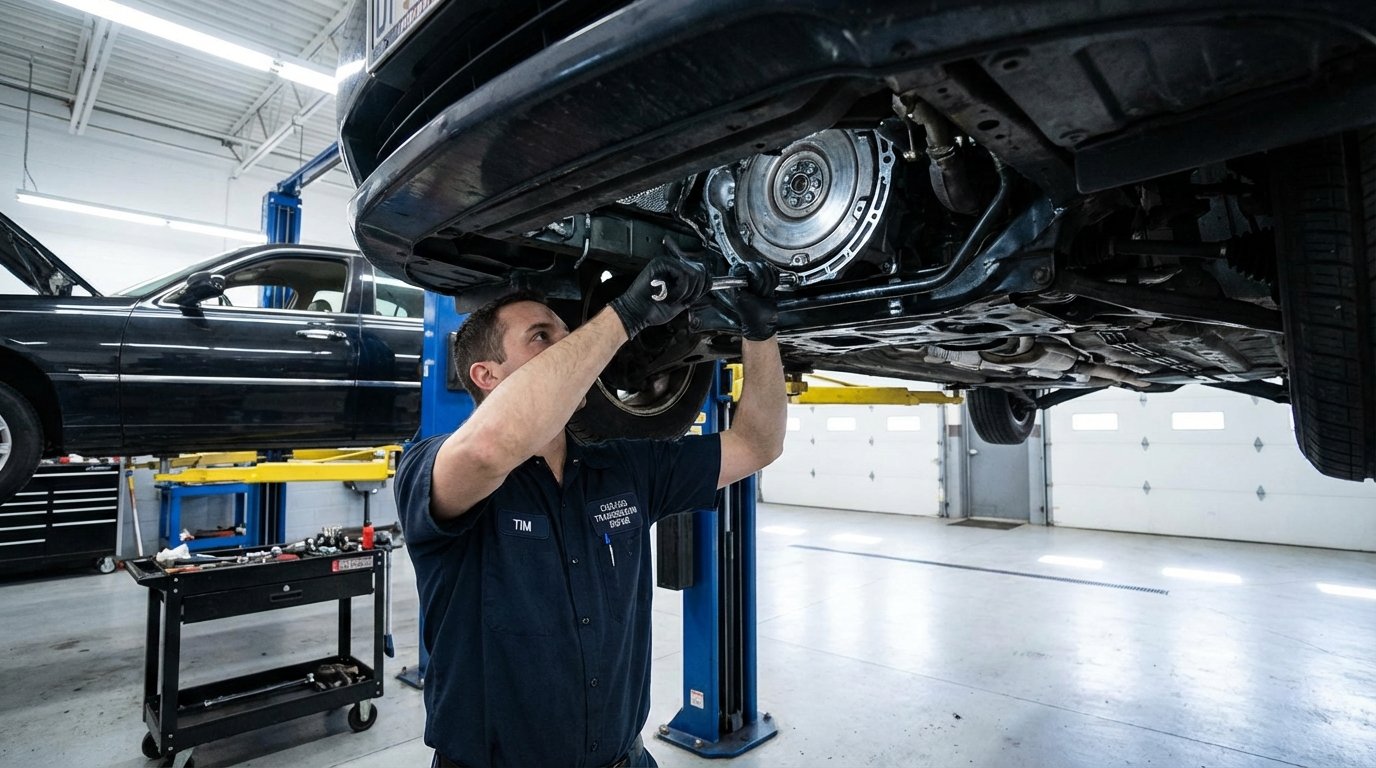
Before teardown, ask which competing causes were ruled out. A mount can create a bang, an axle or tire can create vibration, an engine misfire can imitate converter shudder, low voltage can disturb controls, and restricted cooling can create heat-related symptoms. Apply that boundary to external transmission cooler decisions before authorizing related work near I-80.
09
When a Focused Repair May Be Enough
A focused repair may fit external transmission cooler decisions when testing isolates an external leak, wiring or connector fault, sensor, linkage, mount, solenoid, valve body, converter, or another serviceable area while the rest of the unit remains suitable for use.
The estimate should name the failed function, included parts and labor, fluid, programming or relearn, expected result, and the finding that would require a new approval. That keeps a smaller repair from becoming an open-ended authorization after work starts. Near Route 30, the same rule applies when external transmission cooler decisions is the reason for the appointment.

10
What Must Be Clear Before a Rebuild
A rebuild enters the external transmission cooler decisions decision when evidence supports internal wear or damage and the original case and usable hard parts remain reasonable to recondition. Ask which friction elements, seals, bushings, wear items, updates, valve-body checks, and possible hard parts are included.
Converter and cooler work should be stated, not assumed. Compare the current price, teardown limit, parts condition, programming, fluid, expected downtime, and actual provider warranty with the same items on replacement quotes. Apply that boundary to external transmission cooler decisions before authorizing related work near I-80.
11
Used and Remanufactured Replacement Questions
Replacement may fit external transmission cooler decisions when hard-part damage is extensive, a verified remanufactured unit offers a clearer path, or teardown risk is high. A used unit can lower the initial price, but donor mileage, exact interchange, storage history, warranty, and labor risk matter.
A remanufactured quote should identify the supplier, converter, cooler requirements, programming responsibility, freight and core charges, installation fluid, and claim process. Verify interchange by VIN, build code, drivetrain, and calibration rather than by model name alone. Carry that question into the external transmission cooler decisions review before parts or teardown are approved.
12
Compare the Complete Installed Scope
A useful estimate for external transmission cooler decisions separates diagnosis, parts, labor, fluid, converter, cooler work, programming, towing, taxes, freight, and possible teardown additions. It should say whether the number is firm or depends on disassembly.
Use the exact fluid specification and level procedure, then separate maintenance from an active leak, contamination, pressure loss, overheating, or internal wear. Ask when another approval is required, what evidence supports the recommendation, what is excluded, how long parts may take, and who issues the warranty. Compare the same installed scope before choosing the lowest headline number. Carry that question into the external transmission cooler decisions review before parts or teardown are approved.
13
Vehicle Value, Downtime, and Practical Use
The external transmission cooler decisions decision also depends on the complete vehicle. Consider engine and body condition, rust, tires, brakes, other pending repairs, current loan balance, replacement-vehicle cost, and how long the owner expects to keep it.
Downtime around Joliet has different consequences for a work truck, delivery vehicle, commuter, and family SUV. Ask whether parts can be sourced before the vehicle is left, what could change the schedule, and whether the vehicle must remain at the facility during diagnosis or approval. For external transmission cooler decisions, this item should appear in the diagnosis or written scope.
14
What to Verify After the Work
Completion after work related to external transmission cooler decisions should address the original complaint under a safe version of the same conditions. Confirm fluid level at the specified temperature, no active leaks, stable communication, resolved codes, and expected engagement or shift behavior.
The final invoice should identify parts, programming, adaptation or drive-cycle work, cooler procedures, warranty terms, and any recommended recheck. Keep the original diagnostic findings and report a returning warning, flare, shudder, leak, or delay promptly. Near Route 30, the same rule applies when external transmission cooler decisions is the reason for the appointment.

15
Build a Clear Tow, Diagnosis, and Approval Plan
Prepare the next external transmission cooler decisions conversation with year, make, model, mileage, drivetrain, warning messages, code printout, leak photos, service history, and a plain description of the exact event. Add whether the vehicle is parked near Joliet or still moving normally.
If it is slipping badly, leaking heavily, overheating, stuck in one gear, or failing to engage, ask about towing before Route 30. If it remains stable, schedule diagnosis before major work. The goal is a clear written path, not a rebuild sold from a headline. Use that evidence when discussing external transmission cooler decisions with the receiving facility.

Questions Before Major Work
For external transmission cooler decisions, ask about towing for severe slip, loss of forward or reverse, overheating, rapid fluid loss, grinding, or unreliable engagement near I-80. Do not use a short distance as proof that the vehicle is safe.
When comparing external transmission cooler decisions, put the same diagnosis, parts condition, labor, converter and cooler work, programming, fluid, taxes, towing, possible additions, downtime, and actual written warranty on both sides.
Send the symptom story before approving major work.
Include the vehicle, mileage, warning messages, codes, leak or fluid observations, and what happened near I-80. Use that evidence to narrow towing, diagnosis, repair, rebuild, and replacement choices.