The engine or powertrain controller reports that the transmission controller requested the warning light. Read the transmission module for its specific code, status, and event data before naming a cause.
Joliet / Gateway Code / Read Every Module
P0700: Read the Transmission Controller Before Replacing Parts
P0700 guide for Joliet drivers: read transmission-module codes, preserve event data, judge tow risk, and compare evidence-backed repairs.

P0700 is a general powertrain request that usually means the engine or powertrain controller received a request from the transmission controller to turn on the malfunction indicator lamp. It tells the scan path where to go next. It does not identify a failed solenoid, sensor, valve body, torque converter, clutch, module, or complete transmission. The transmission controller normally has the more specific code, status, failure subtype, and event record needed to understand why the request was made.
P0700 is a request, not the root-cause diagnosis. A reader that can see only engine codes may display P0700 and nothing else even though the transmission module stores the useful fault. Preserve all-module codes and event data before clearing anything, identify the exact transmission and control system, and connect the stored information to the driver's actual symptom before approving parts or major work.
01
What a Joliet Driver May Notice With P0700
Some vehicles show only a check-engine light. Others may also display a transmission warning, hold one gear, raise line pressure, delay engagement, shift harshly, disable manual selection, reduce acceleration, or limit engine torque. Those changes can be a protective strategy commanded after another fault was detected. Harsh fail-safe operation does not by itself prove that hard parts suddenly failed.
Write down what happened before the light appeared: the range selected, road speed, engine speed, temperature, load, shift being attempted, warning message, and whether cycling the key changed the behavior. Note recent battery, charging-system, engine, wiring, programming, or transmission work. P0700 can accompany a clear shift complaint, an electrical event, a communication problem, or an issue with almost no noticeable transmission symptom.
02
The Joliet Route and Weather Help Recreate the Event
A warning during a cold start near downtown Joliet is a different test condition from one that appears after slow summer traffic on Jefferson Street. A complaint during an I-55 or I-80 merge may require commanded gear, input speed, output speed, pressure command, throttle, and temperature captured under controlled load. A fault after railroad tracks or rough pavement can make connector and harness movement more important to the inspection.
Tell the diagnostic provider whether the vehicle had traveled from Plainfield, Shorewood, Crest Hill, Channahon, or another nearby area; whether it was carrying cargo or towing; and whether the symptom occurs cold, hot, after a long idle, or only after a specific shift. Local detail should define a safe test condition. It should never be used to pretend that one Joliet driving pattern proves one transmission failure.

03
When P0700 Should Become a Tow Decision
Stop driving and ask about an appropriate tow when drive or reverse will not engage reliably, the transmission repeatedly falls out of gear, engine speed rises without matching road speed, shifts are violent enough to affect control, fluid is leaving quickly, a temperature warning appears, or the vehicle cannot accelerate safely for traffic. Continuing to force a slipping or overheated unit can add heat and debris to the original fault.
A stored P0700 with normal engagement and stable operation may allow a scheduled diagnostic visit, but the decision depends on current behavior, traffic, distance, weather, and the ability to pull over. Do not treat a light that went out after a restart as proof of safety. Do not clear the code simply to see whether it returns; clearing can erase the event record that identifies the operating condition.

04
Read the Transmission Module, Not Only the Engine Module
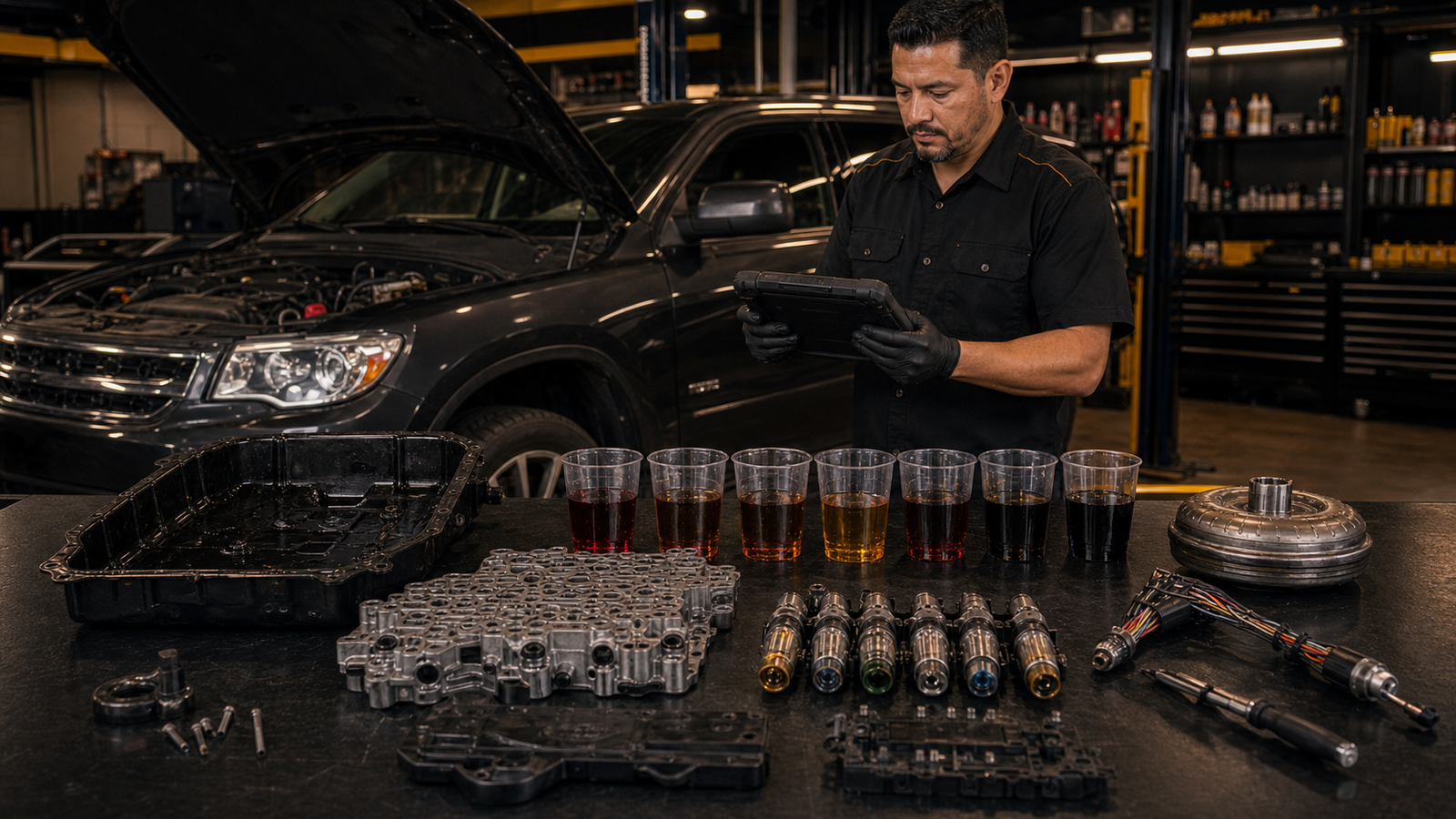
Treat the general powertrain request as the beginning of a full-vehicle scan using equipment that can communicate with the transmission controller and related gateway, engine, brake, body, hybrid, and all-wheel-drive modules where applicable. Save confirmed, pending, history, and permanent codes; module addresses; status bytes; failure subtypes; freeze-frame or event data; software identifiers; and network faults. A parts-store reader may accurately show P0700 while still being unable to reach the module that requested the light.
Identify the installed transmission by VIN, engine, model year, drivetrain, build information, calibration, and unit identification before applying a code chart. The same vehicle name can use different transmissions and control layouts. Code definitions, access points, pressure strategy, sensor design, and relearn procedures can change across those units. The scan record and the installed hardware must agree.
| Scan finding | What it means | Next question |
|---|---|---|
| P0700 in the engine or powertrain controller | Another controller requested malfunction-indicator-lamp operation | Which transmission-module code and status triggered the request? |
| P0700 with no accessible transmission module | The tool may lack coverage, or communication or module power may be missing | Can a capable tool establish communication and verify power, ground, and network integrity? |
| P07xx sensor or circuit code | The controller saw an electrical, signal, range, or performance problem | What does the exact subtype and live signal show on this unit? |
| P0730-P0736 ratio code | Commanded and calculated gear behavior did not agree | Are input and output signals valid, and is there measured slip or pressure loss? |
| P0741 or converter-clutch code | Converter clutch command and measured response did not agree | Is the cause hydraulic, electrical, calibration-related, or mechanical? |
| U-code or network fault | A module message was missing, delayed, or implausible | Did voltage, wiring, connector, gateway, or module communication fail first? |
| Voltage or relay-related companion code | The control system may have lost stable power or wake-up state | Are battery, charging, grounds, relay output, and voltage-drop results acceptable under load? |
| No returning subcode after data was cleared | The original evidence is no longer available | Can the exact event be reproduced safely without guessing or replacing parts? |
05
Preserve the Event Before Trying to Reproduce It
Freeze-frame or module event data can show vehicle speed, engine load, temperature, voltage, commanded gear, turbine or input speed, output speed, pressure command, and the time or distance since the fault. Not every controller stores every item, and a generic freeze frame may belong to the engine module rather than the transmission controller. Label the source of each record before drawing conclusions.
If a road test is safe, graph related signals together and reproduce the lightest version of the customer's event. Stop if engagement, temperature, or vehicle control becomes unreliable. The point is not to make the transmission fail harder. It is to learn which command, signal, pressure, or mechanical response changes first and to save that result for the estimate and post-repair comparison.
| Record | Why preserve it | How it guides testing |
|---|---|---|
| Code status and failure subtype | Separates current, intermittent, history, circuit, range, and performance information | Chooses the correct manufacturer test path before parts are named |
| Module freeze frame or event data | Captures the conditions under which the requesting controller detected the fault | Sets temperature, load, speed, and gear targets for a controlled retest |
| Engine, input, and output speed | Shows whether measured shaft relationships were plausible | Separates signal loss from validated slip or ratio error |
| Commanded gear and pressure or solenoid command | Shows what the controller was trying to make the unit do | Compares electronic command with hydraulic and mechanical response |
| Transmission temperature | Many faults appear only cold, warm, or after heat soak | Prevents a room-temperature check from missing the customer's condition |
| System and module voltage | Low or unstable voltage can create misleading module and communication faults | Moves battery, charging, relay, ground, and voltage-drop checks earlier |

06
Fluid and Leak Findings Support the Diagnosis but Do Not Decode P0700
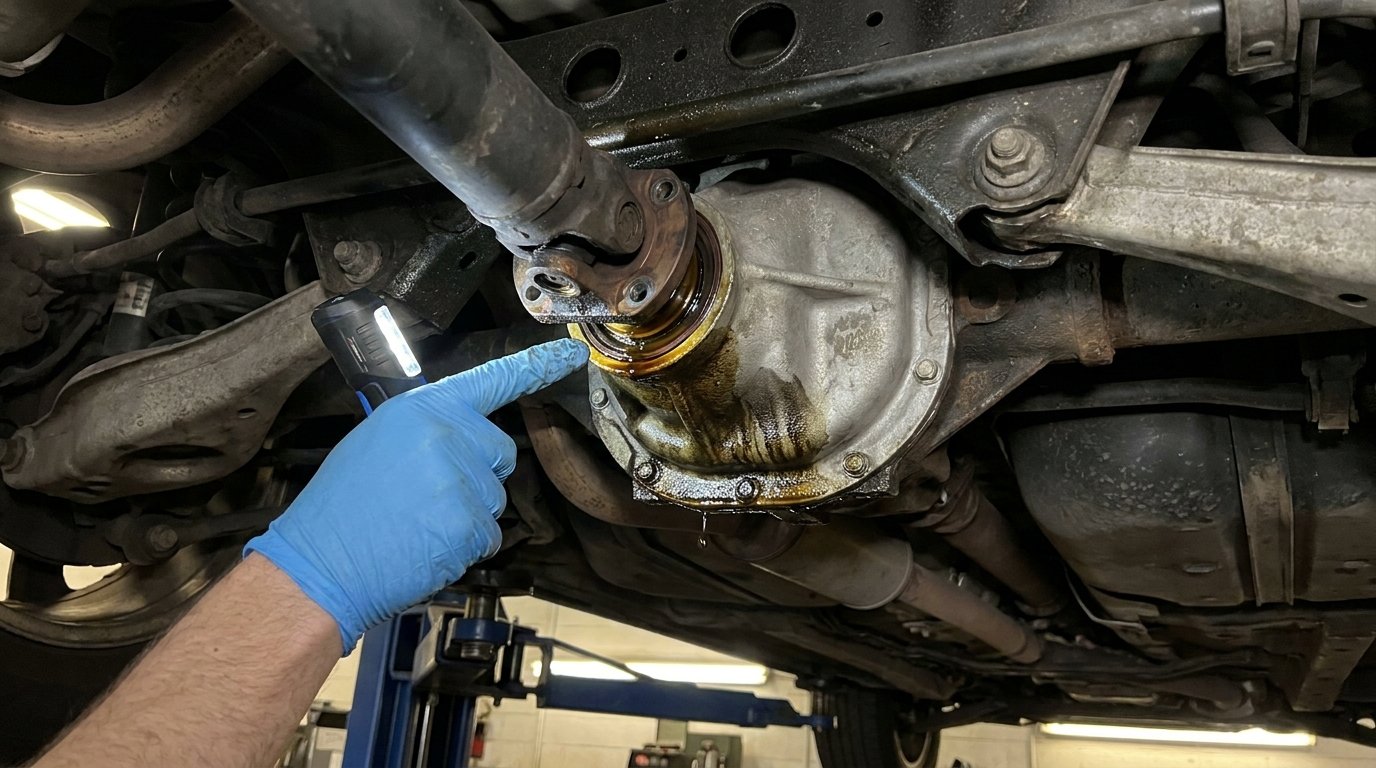
Check transmission fluid using the correct unit-specific level and temperature procedure. Record level, leaks, odor, color, visible debris, and service history. Low fluid, overheating, or heavy friction material may support a hydraulic or internal problem behind the module request. Clean-looking fluid does not rule out an electrical or mechanical fault, and dark fluid alone does not identify one.
A fluid exchange cannot repair a failed power feed, damaged wire, loose terminal, speed sensor, pressure-control circuit, communication fault, calibration issue, worn clutch, or broken hard part. Fluid service may be appropriate when the identified unit, condition, maintenance history, and test results support it. It should not be sold as a generic way to erase P0700 or postpone a known slipping condition.

07
Check Power, Grounds, Network, and Control Inputs in Order
Before condemning a transmission controller, verify battery condition, charging voltage, loaded voltage drop, fuses, relay operation, wake-up feeds, grounds, connector fit, terminal tension, water or fluid intrusion, and network integrity using the correct wiring information. A module can communicate in the bay and still reset or lose a signal under heat, vibration, starter load, or a commanded actuator test.
Bidirectional controls, waveform checks, pressure tests, and pin measurements must match the exact unit and circuit. Do not apply a universal resistance, voltage, or pressure number to every solenoid or sensor. Back-probing or powering the wrong terminal can damage a module. When access requires pan removal or an internal harness inspection, the estimate should separate diagnosis from authorized internal access.
08
Separate a Controller Request From Proof of Internal Damage
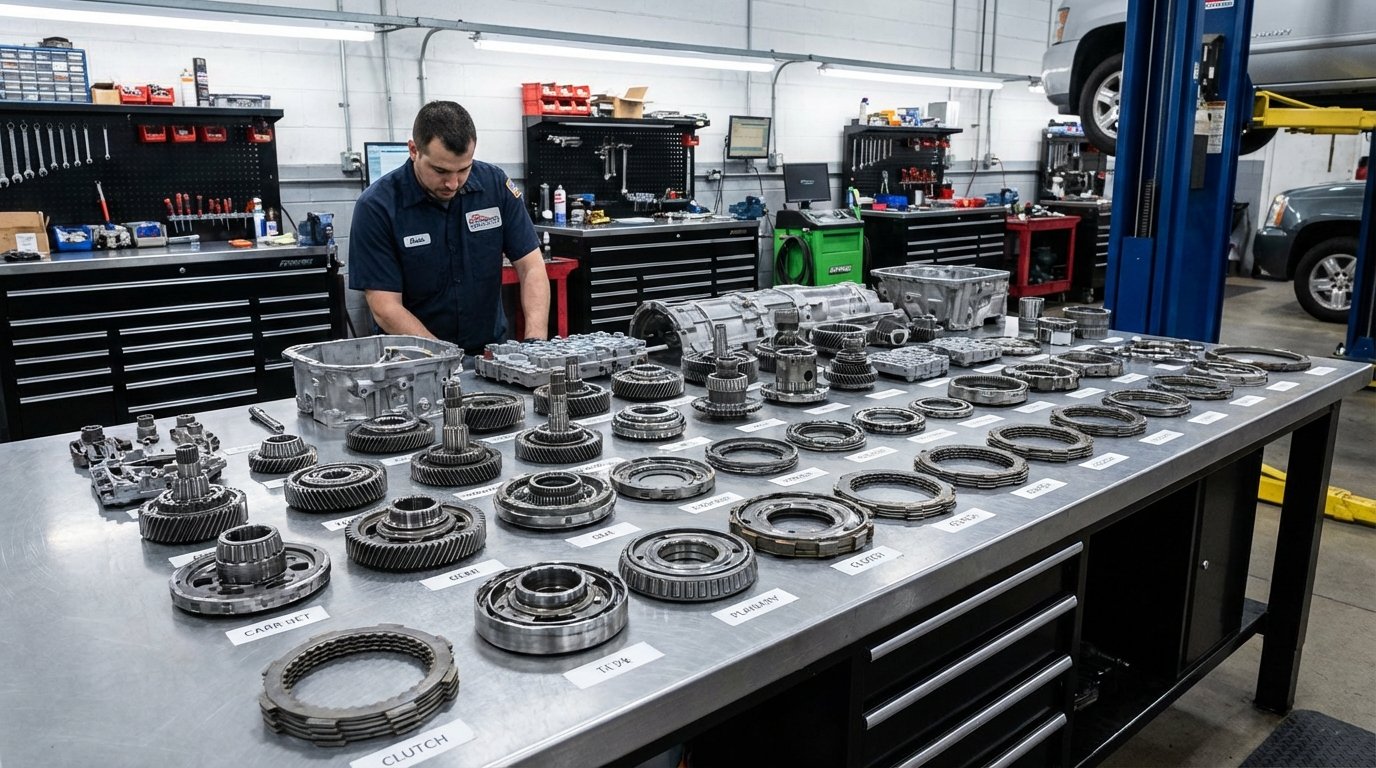
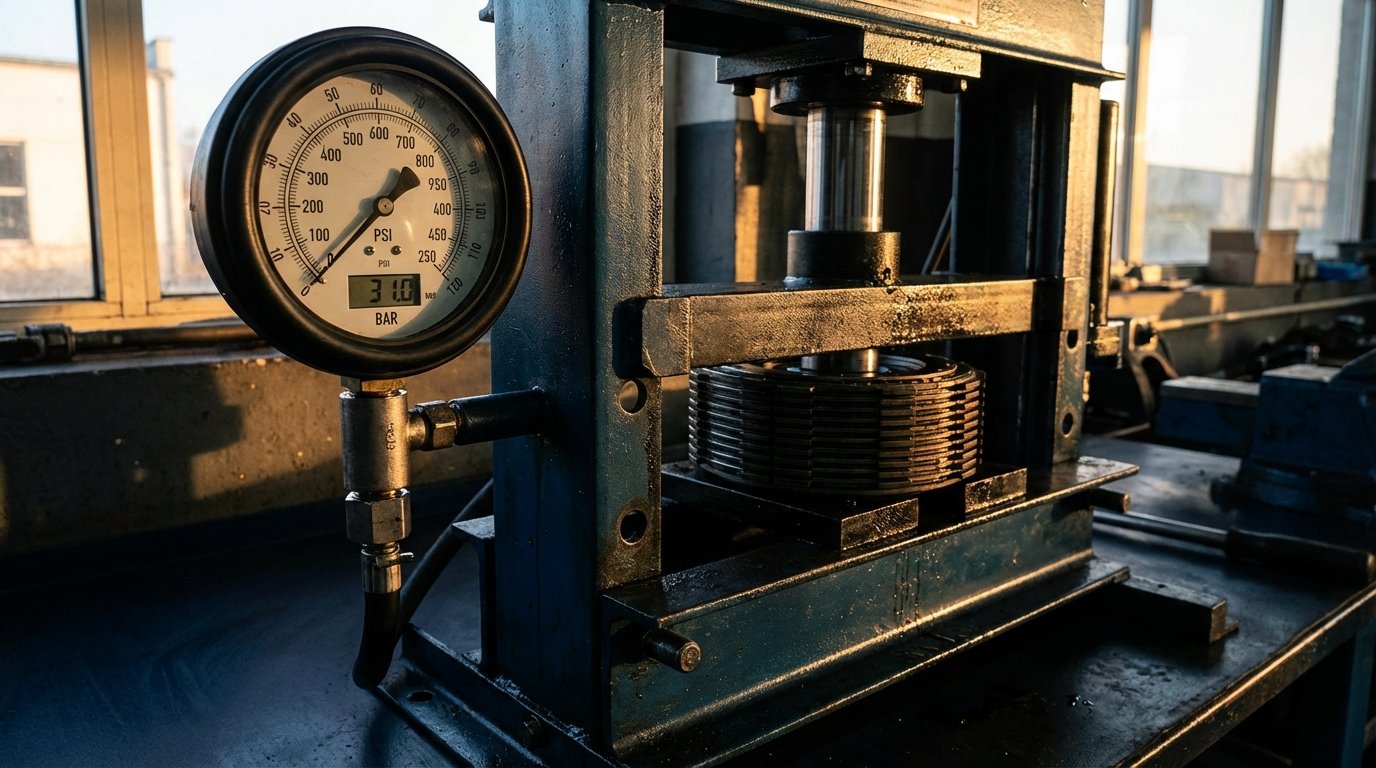
Internal damage becomes more likely when valid speed data shows repeatable slip, pressure remains below specification despite correct command, a clutch or gear cannot hold, the pan contains substantial friction or metal, a bearing or shaft has measurable damage, or air and hydraulic checks isolate an internal leak. Those findings stand on their own; P0700 does not create them.
Conversely, normal engagement, clean electrical repair results, stable communication, correct live data, and no returning transmission subcode can support a focused repair without opening the unit. A technician should explain which finding moves the recommendation from external testing to pan access, valve-body work, internal inspection, rebuild, or replacement.
09
Let the Companion Code and Test Result Define the Repair
The useful estimate is tied to the code stored in the transmission controller and the test that confirmed its cause. An open external wire is not priced like an internal harness. A calibration correction is not priced like a valve body. Verified clutch slip is not priced like a lost module power feed. Ask to see the evidence path in plain language.
Official manufacturer bulletins demonstrate why P0700 cannot be assigned one universal repair. Honda Service Bulletin 25-017 limits a software update path to defined 2023-2024 Accord Hybrid and CR-V Hybrid conditions involving cold-start vibration and below-freezing data. GM PIP5757 discusses a defined 2020 Corvette condition with P1967 or P1968 and tells technicians to diagnose other transmission-controller codes first. Neither document applies to every vehicle with P0700.
| Confirmed path | Evidence needed | Repair boundary |
|---|---|---|
| Battery, relay, power, or ground fault | Loaded voltage, voltage-drop, relay, fuse, and module-reset results | Correct the supply fault and verify stable module operation before transmission parts |
| External wiring or connector fault | Visual, terminal-tension, continuity, load, movement, and heat testing | Repair the identified circuit and protect routing; do not replace unrelated internal parts |
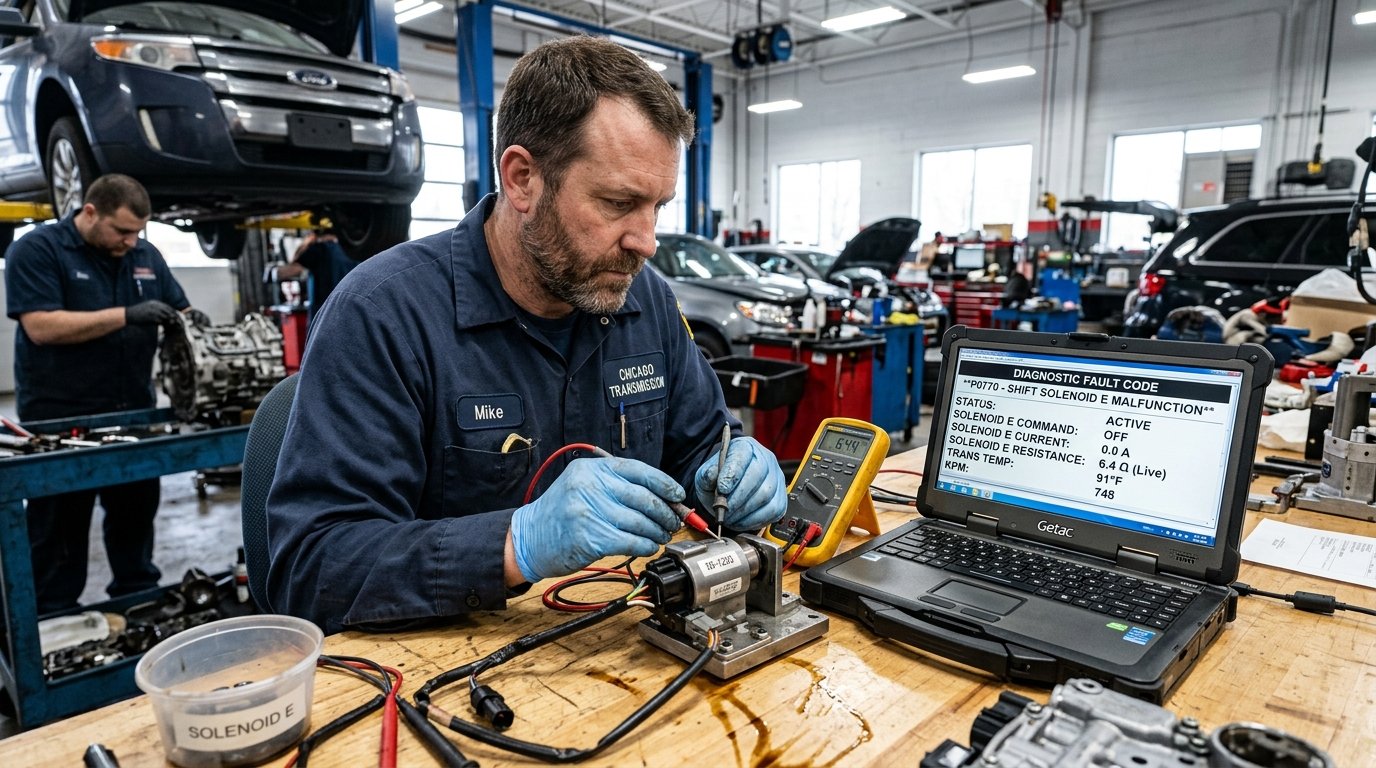
| Sensor or solenoid circuit fault | Exact code subtype, command, signal, waveform, and circuit isolation | Replace only the proven component or integrated assembly with required seals and fluid |
| Software or calibration condition | VIN applicability, software level, applicable service information, and matching symptoms | Program or update only when the exact vehicle and condition qualify |
| Valve-body or hydraulic-control fault | Command-versus-response data, pressure evidence, contamination findings, and unit-specific tests | Define valve-body access, parts, programming, fluid, and post-repair adaptation |
| Internal clutch, bearing, or hard-part damage | Validated slip or ratio error, pressure loss, debris, noise, play, or teardown findings | Compare authorized internal repair, rebuild, and complete-unit options in writing |
| No fault reproduced after data was erased | A documented attempt under the original temperature, load, and route condition | Do not sell speculative parts; plan monitoring or a controlled follow-up test |
10
P0700 Alone Is Never a Rebuild Diagnosis
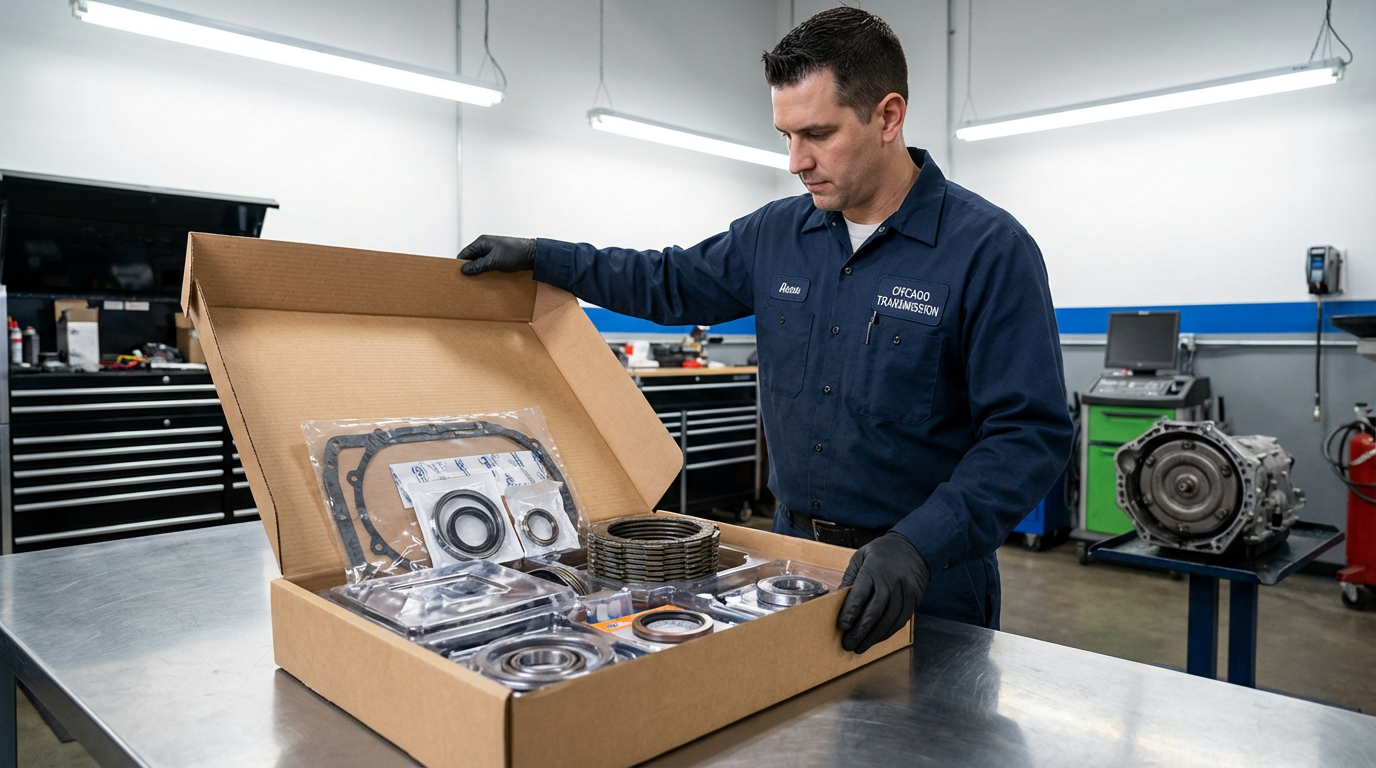
A rebuild becomes reasonable only when separate evidence shows internal wear or damage broad enough that isolated repair is not the sound scope. The written recommendation should identify the failed clutch, hydraulic leak, bearing, pump, drum, gearset, case, or contamination path and explain what the rebuild will renew, inspect, machine, reuse, or replace. The module request is only an entry in that record.
Before teardown, settle authorization, diagnostic and teardown charges, the approval point for added damage, converter work, cooler inspection or replacement, hard-part limits, solenoid or valve-body scope, programming, fluid, warranty terms, and final installed price. A rebuild label without those details does not let a Joliet driver compare it fairly with focused repair or replacement.
11
Identify the Unit Before Comparing Replacement Options
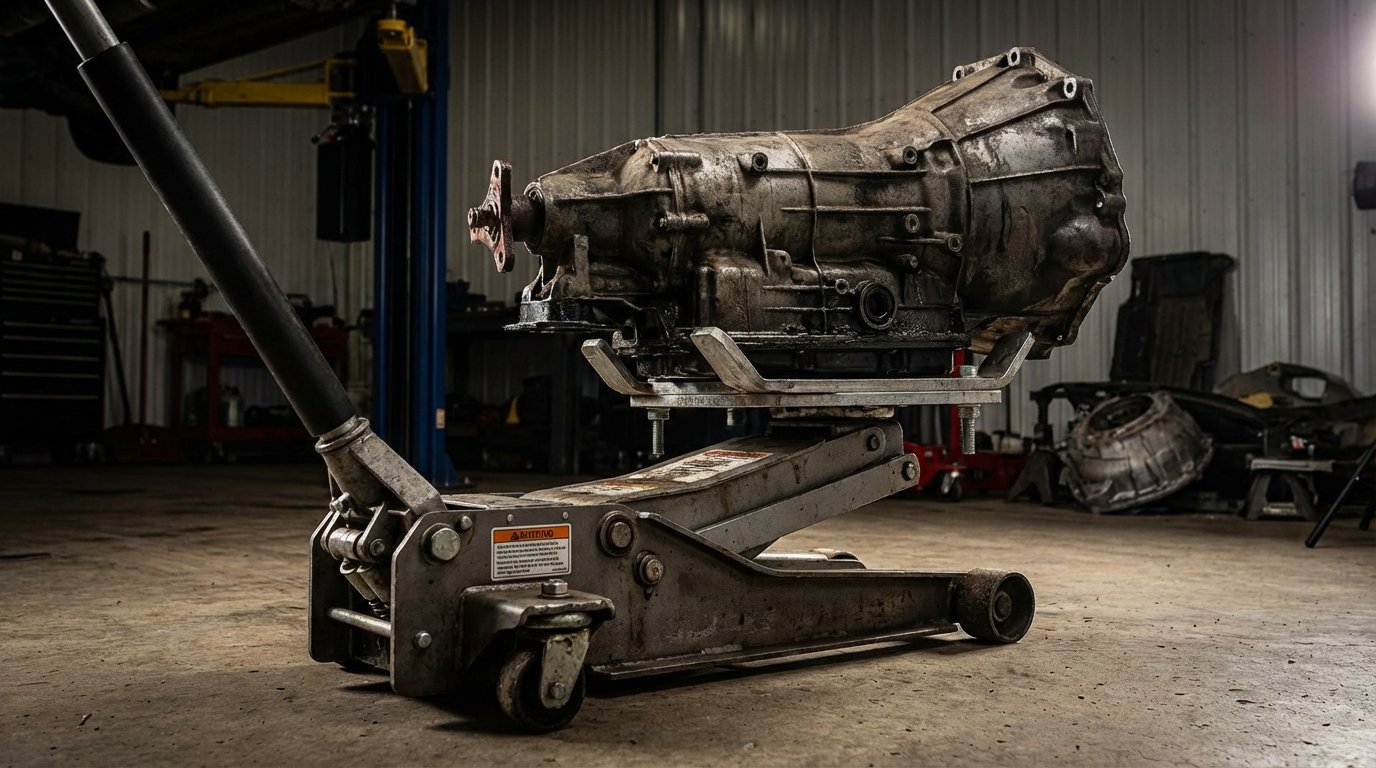
If damage supports complete replacement, identify the unit by VIN, engine, drivetrain, case or build code, connector, gear ratio, calibration, and applicable supersessions. A used, remanufactured, or new assembly can fit physically and still be electronically or mechanically wrong for the vehicle. Ask who verifies interchange before the old unit is removed.
Compare mileage and source documentation for a used unit; remanufacturer scope and testing for a remanufactured unit; converter, cooler, seals, fluid, freight, core, programming, adaptation, labor, and warranty for every option. Also ask whether a separate power, wiring, communication, or cooling problem that caused P0700 must be corrected before the replacement is installed.
12
What a P0700 Written Estimate Should Separate
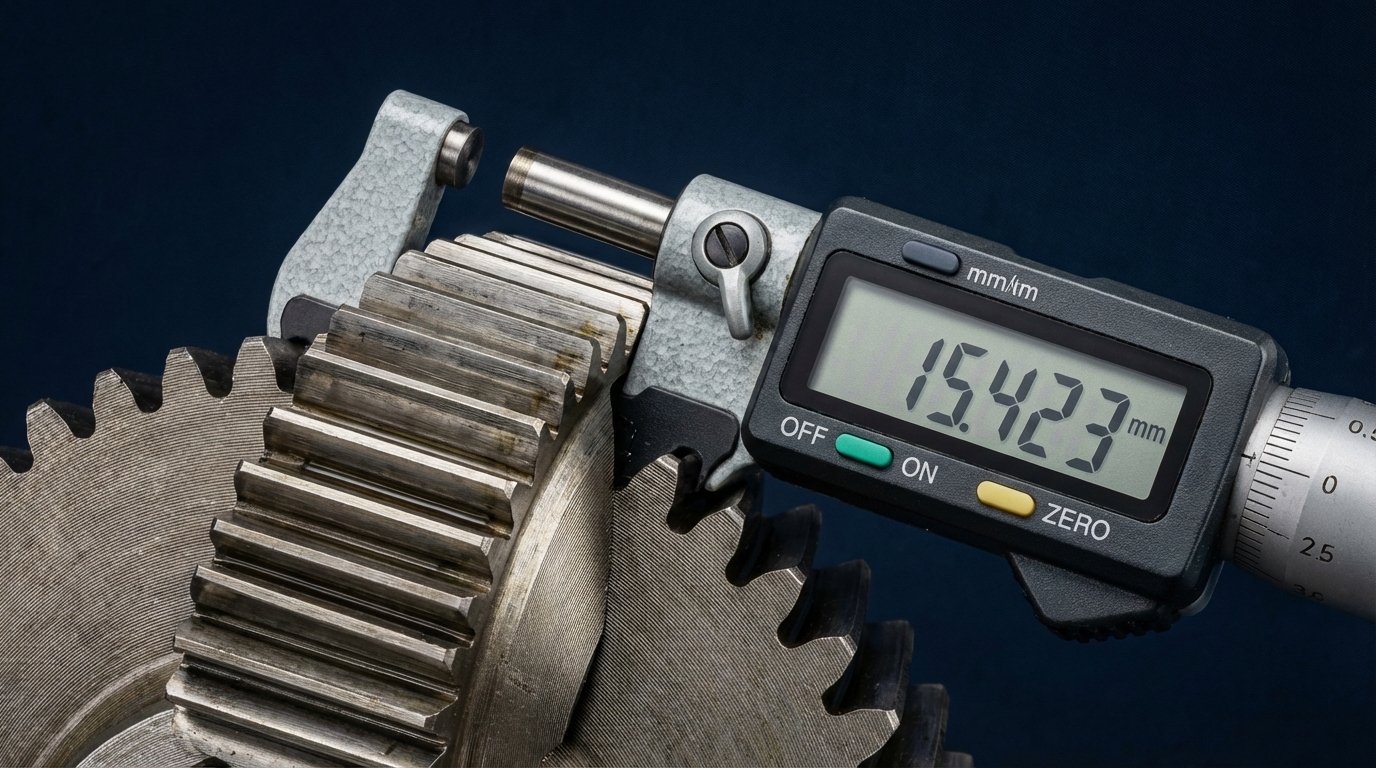
A useful estimate names the transmission-controller code, the condition under which it set, the test that isolated the cause, and the exact scope being authorized. Diagnostic time should be visible instead of hidden inside a parts price. When more access may reveal additional damage, the estimate should state the next approval point before the total grows.
Compare estimates on the same installed scope. A low headline price may exclude fluid, seals, programming, freight, towing, cooler work, taxes, or verification. Written inclusions, exclusions, warranty terms, and contingent findings protect the decision better than a verbal promise that the light will stay off.
| Estimate line | What should be written | Decision protected |
|---|---|---|
| Diagnostic record | P0700 plus the transmission-module codes, statuses, event data, and reproduced symptom | Prevents the gateway code from being presented as the failed part |
| Confirmed cause | Circuit, component, hydraulic, software, communication, or internal finding and the test result | Connects the repair to evidence |
| Authorized scope | Diagnosis, external repair, pan access, valve body, internal repair, rebuild, or replacement | Defines what can be done now |
| Parts and access items | Components, harnesses, seals, gaskets, filters, fluid, converter, cooler, and one-time-use hardware | Makes installed options comparable |
| Programming and learning | Software update, coding, setup, adaptation reset, relearn, and drive-cycle requirements | Avoids an incomplete electronic installation |
| Contingent findings | What additional damage could be found and the approval point before cost increases | Limits open-ended authorization |
| Verification | All-module rescan, repeat event test, live-data check, fluid level, leak check, and original complaint confirmation | Defines how success will be proven |
| Installed total and warranty | Labor, parts, fluid, programming, freight, core, towing, taxes, term, mileage, exclusions, and claim process | Shows the real cost and written protection |
13
Balance Repair Depth With Downtime and Vehicle Condition
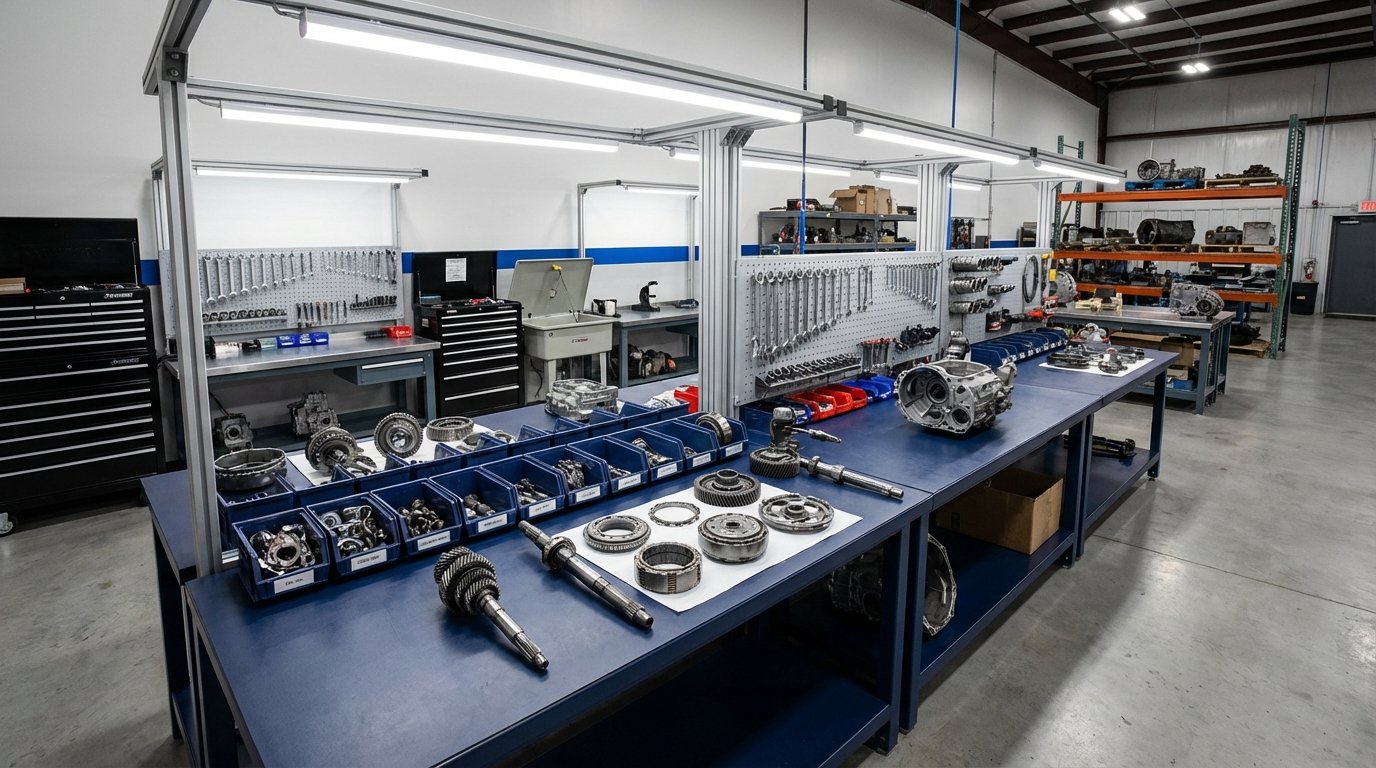
A power-feed repair, internal harness repair, valve-body replacement, rebuild, and complete transmission have very different cost and downtime. Consider vehicle condition, rust, mileage, engine and cooling-system health, other warning lights, current loan balance, work or family use, and how long the vehicle is expected to remain in service. Do not let P0700 turn that decision into an automatic major repair.
Ask whether diagnosis or programming requires the vehicle to remain on site, whether parts are VIN-specific, whether data must be captured cold or fully warm, and whether a follow-up drive cycle is required. A documented code tree and test result can reduce repeated appointments and help the owner choose a focused repair, authorized inspection, rebuild, replacement, monitoring plan, or retirement of the vehicle.
14
Prove the Request and Root-Cause Code Stay Resolved
Verification should rescan every relevant module, confirm stable voltage and communication, and repeat the operating condition that set the transmission-controller code whenever it is safe. Confirm no returning current or pending code, plausible live data, expected command and response, correct engagement and shifts, and completion of required programming or adaptation steps.
Also verify fluid level at the correct temperature, inspect disturbed connectors and seals for leaks, and confirm the driver's original complaint. 'P0700 cleared' is not proof; any scan tool can erase the request. The final invoice should name the root-cause fault and summarize the post-repair test that showed the controller no longer needed to request the warning light.
15
What to Send Before a P0700 Diagnostic Visit
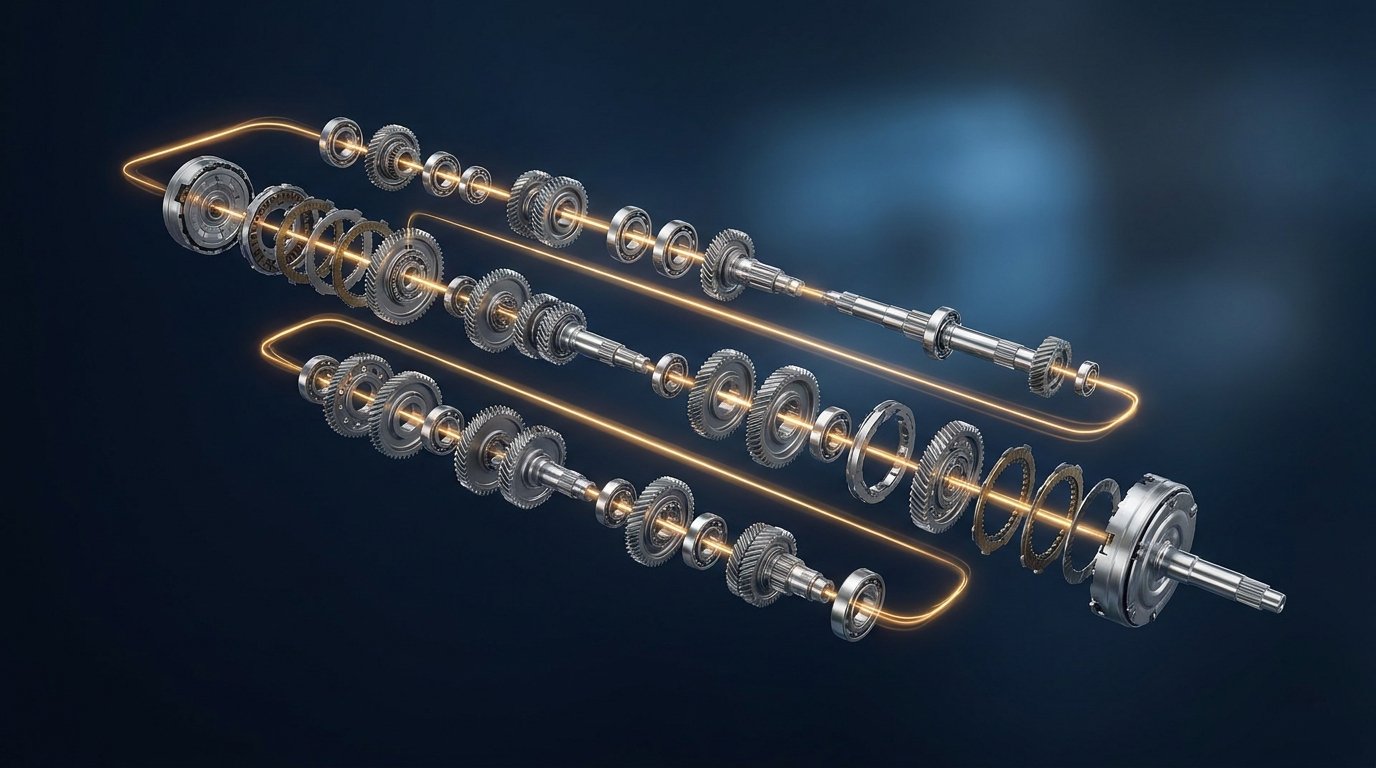
Send the year, make, model, mileage, engine, drivetrain if known, every code from every reachable module, warning messages, recent battery or repair history, fluid spots, and a plain description of the event. Include whether the vehicle was cold or warm, which gear was selected, whether engine speed flared, whether all ranges still worked, and where the fault appeared around Joliet.
If engagement is unreliable, slip is severe, the vehicle is stuck in a fail-safe gear, fluid is leaving quickly, or acceleration is unsafe, ask about towing before moving it. If operation remains stable, arrange an all-module scan before clearing data or approving parts. The immediate goal is to move past the gateway code and turn the controller's actual record into a specific written decision.
Questions Before Major Work
The scanner may read only generic engine codes and may not have access to the transmission controller. A capable all-module scan should confirm communication and retrieve the codes stored by the requesting module.
No. A rebuild requires separate evidence of internal wear or damage. P0700 can accompany wiring, power, relay, sensor, solenoid, software, communication, hydraulic, or mechanical faults, and the transmission-module record must separate them.
The code alone cannot decide that. Park the vehicle and ask about towing if it slips badly, will not engage, loses a gear, overheats, leaks heavily, shifts violently, or cannot accelerate safely. Stable operation still deserves prompt diagnosis.
Low or unstable voltage can reset modules, interrupt communication, or create companion faults that result in a warning request. Battery, charging, relay, ground, and loaded voltage-drop tests should be considered when the code record supports that path.
A fluid service cannot repair a circuit, module, communication, software, sensor, solenoid, or internal mechanical fault. Fluid level and condition are useful evidence, but service should be recommended from the exact unit, history, and test results.
It should include an all-module scan, preserved status and event data, exact transmission identification, symptom and safety assessment, unit-specific electrical or hydraulic tests, and a written explanation linking the confirmed cause to the proposed repair and verification.
Move past P0700 to the code that explains the repair.
Send the vehicle details, every module code, warning messages, exact shift behavior, recent electrical or repair history, and the Joliet-area condition where the light appeared. Use that record to decide between towing, circuit testing, a focused repair, internal inspection, rebuild, or replacement.